
I never imagined that the neighborhoods where I grew up would be the best leadership school God could give me. From Santo Domingo to New York and, for the last 27 years, Houston: three distinct cities, united by a single thread—the urban margins.
My story was shaped by the city: the neighborhoods, the immigrant families who work while everyone else sleeps, the noise, the shared apartments… That world molded me, defined my calling as a pastor and church planter, and taught me that mission doesn't begin in a church building, but in the streets, on street corners, and in the spaces where real life happens.
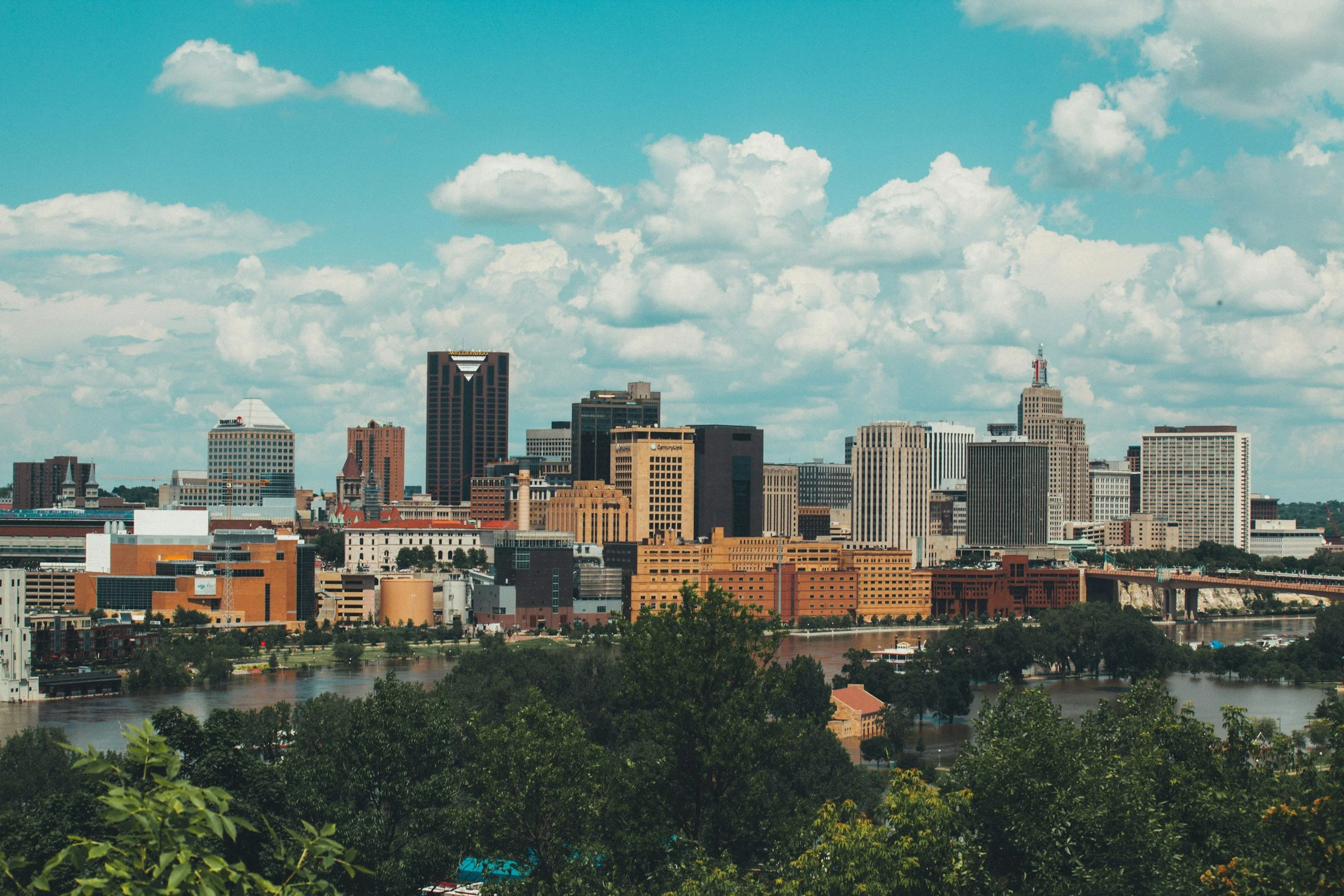
The urban margins are now the heart of the opportunity for advancing the gospel among the Latino population.
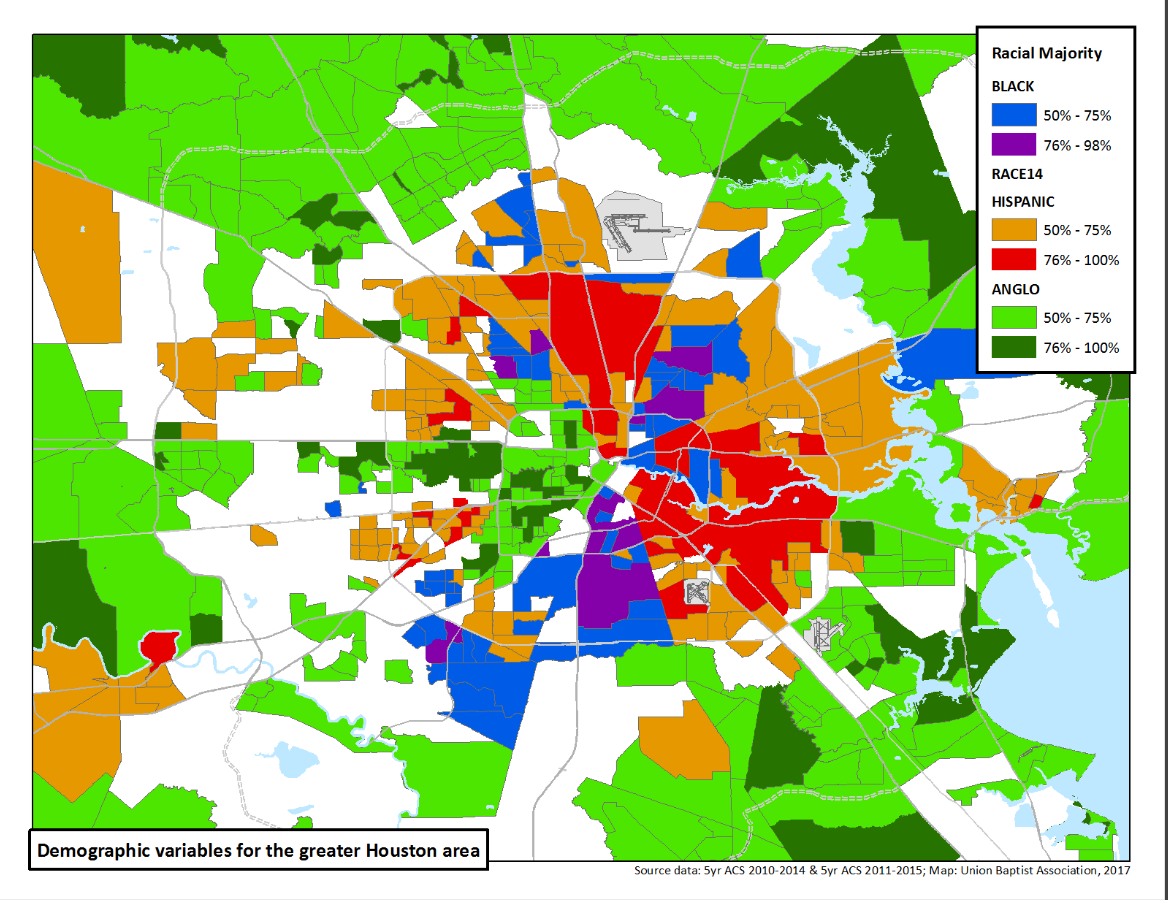
Houston reflects a dynamic repeated in all major cities across the country—New York, Chicago, Los Angeles: the vast majority of Latino immigrants are growing, diversifying, and concentrating on the margins of the city center. This demographic landscape presents us with a clear missional imperative: the urban margins are now the heart of the opportunity for advancing the gospel among the Latino population.
The Latino population is increasingly urban. The United Nations predicts that, by 2050, nine out of ten Latino Americans will live in cities. And this isn't just a future trend: a 2023 Lifeway Research study reveals that more than 80% of Latino churches in the United States are already located in urban areas.
Dr. Josh Ellis, “Forests and Deserts”
However, at least in Houston, the reality is that for every ten churches planted, only one is born on the margins, where the majority of Hispanics live. Adding to this is another challenge: many training models were designed for Anglo-Saxon suburban contexts, then translated into Spanish, and we assume they will work in neighborhoods where life moves with different pressures, rhythms, and social dynamics.
Furthermore, many of our churches established in the urban center—though full of missional commitment—operate with a rural mindset and with models that don't always reflect our culture or reality. The result: we do ministry "like we did 20 years ago," while the city has completely changed, leading to frustration, burnout, and disconnection from the neighborhood. And, to top it all off, the lack of equitable funding persists.
The most recent study by LifeWay Research reveals that 79% of the resources to start a Hispanic church come from the church plant itself, and 43% come directly from the pastor's or planter's own pocket. Added to this is a paternalistic mentality in sectors of the majority culture, where people still speak in terms of "help" instead of collaboration and true partnership.
But despite these economic and cultural gaps, urban church planting doesn't stop—nor can it. We can't wait for others to decide to fund equitably before we begin planting healthy churches. This is why, when we talk about Latino church planting, it's not enough to simply translate models. We must interpret them, contextualize them, and allow the neighborhood to have a voice. The ultimate goal cannot be numbers. As Latino leaders, we are uniquely positioned to lead a church planting movement that not only strengthens our communities but also contributes to the overall well-being of the entire city.
As Jeremiah 29:7 says:
“Seek the welfare (shalom) of the city”
A New Model: Incarnation and Discipleship
At the UBA Hispanic Church Planter Training Center, we asked ourselves a crucial question:
How can we plant churches that enrich the community, love the city, and contribute to urban shalom? We discovered that the key isn't a program, but a deep commitment to incarnation.
There's a huge difference between starting a Sunday service and planting a church. Church planting doesn't begin with the first service, but when the planter embodies their community and commits to walking its streets, getting to know its neighbors, eating at the same places, listening to their stories, and sharing life. It means belonging to the rhythm of the neighborhood, not arriving as a "savior."
In this model, discipleship ceases to be an event and becomes a journey that begins before conversion and accompanies the disciple's entire life. Evangelism flows from authentic relationships; it's not a transactional event, but a natural part of the discipleship journey.
The church's public expression also changes. Unlike the typical "launch," the community discerns together how and when to become visible. It can take the form of a traditional service, a network of homes, or a hybrid model. The difference is that the attraction isn't the program or the service: it's the shared mission.
Our vision for urban Latino planting
Our desire for Houston—and for other cities across the country—is simple:
That in every corner where Latinos live, there will be a vibrant, healthy, and mission-minded community that loves its neighborhood, integrates faith and life, and develops leaders to be sent out.
That there will be genuine collaboration among churches, denominations, and church planters, not seeking the spotlight, but acting as partners in the mission to saturate the city with the gospel and work for God's shalom (peace) for the city.
If reading this article has inspired you to plant churches, the Hispanic Church Planter Training Center can support you. A new cohort begins in January 2026.
If you are interested, fill out the application here: 👉 https://forms.gle/um9FxwxJwGWZxino9 or email Victor Marte — victor@ubahouston.org




“Pastor, ¿Cómo sigue usted aferrándose a la esperanza cuando el mundo se siente tan pesado?”