
The Gift of Limits: Hope for Those Doing It All in Ministry
Burnout is a hot topic these days. I know because when I published this article on ministry burnout and the accompanying burnout assessment worksheet, many of you reached out to say how much you and your people needed it.
But if we’re really going to solve the issue of ministry burnout, we need to go upstream. We need to talk about why and how we’re tempted to live beyond our means, leading us to burn out.
We need to talk about limits.

When we try to fill our glass with more than it can hold, we only end up with a mess.
I know, I know. Mentioning limits in a hustle town like Houston feels like a bad word (or worse, a spiritual failure). Especially as women in ministry, we may feel the unique weight of holding worlds together for our families, our ministries, and those we care for.
So we fall into the refrain of: “If I don’t do it, who will?”
Culture (even church culture) promises we can have it all if we try just hard enough. So, we buy a new planner, wake up earlier, habit track, cold plunge, or do whatever new trend is supposed to help us do more, be more, and carry more.
Now, I’m all about disciplines and systems to be your best, but I fear these manic efforts miss one fundamental truth: we are not God. And we should stop trying to be him.
This article is a discussion of 3 common errors that can lead to burnout, which I led at our last Women in Ministry check-in.
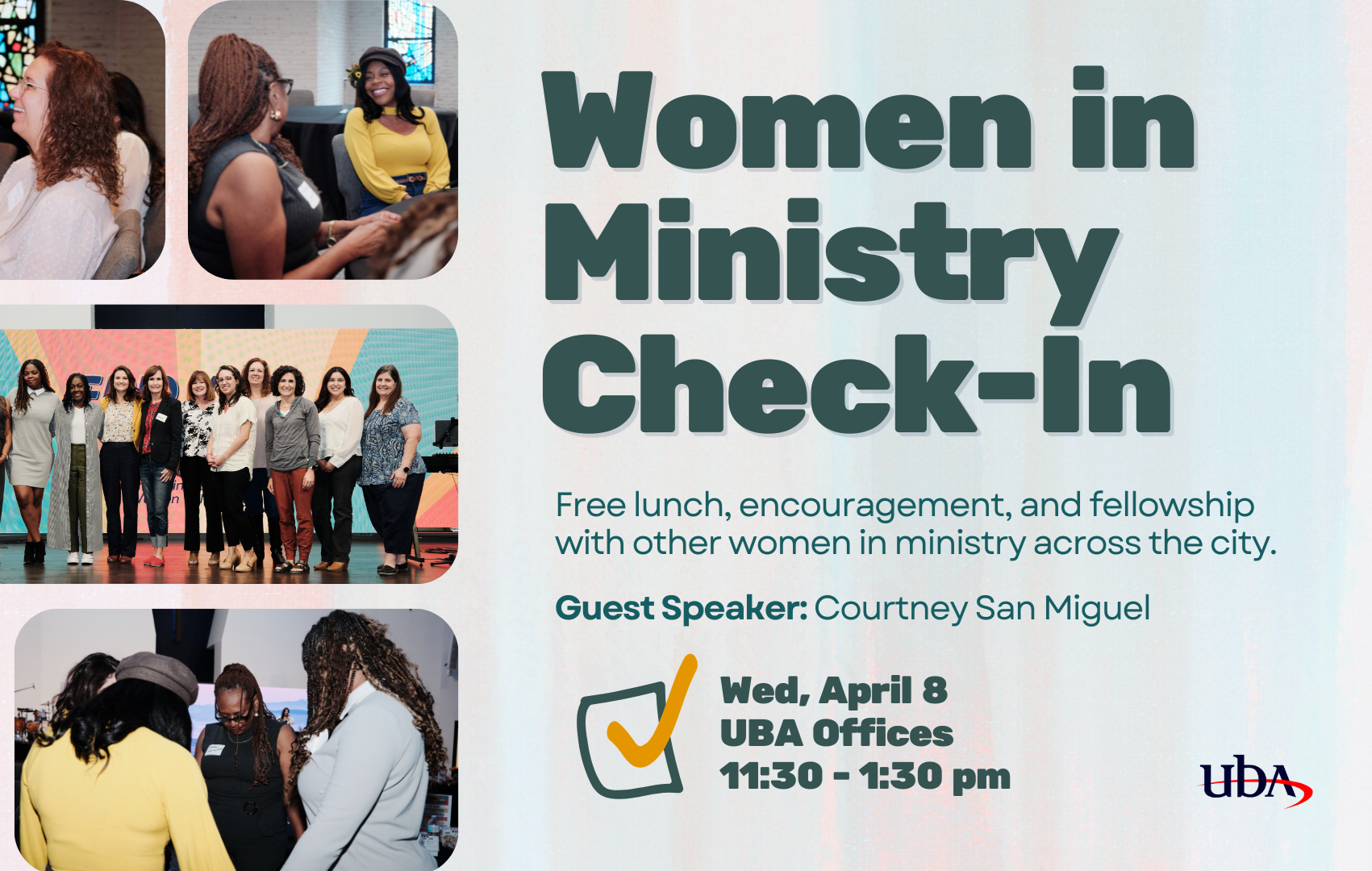
At each check-in, we aim to create a safe space for women to build community, grow together, and recharge for ministry. If that’s you, we’d love to see you on April 8.
Want to talk about sustainable ministry for your context?
Error 1: We want to do it all. But we’re not God.
Even before sin entered the scene, God gave His people limits. In the Garden, God said a limited and dependent humanity was "very good." He modeled a rhythm of hard work and deep rest and then commanded us to follow it.
But like Eve, we are tempted to believe that being "mere mortals" isn't enough. We want to do it all, even when God said that’s not for us.
Think of your life like a finite glass. The glass is your God-given capacity. The liquid inside is your life: your schedule, hard conversations, sick kids, ministry prep, high-pressure leadership decisions, and the mental load you carry for your people.
Depending on the size of the glass, it can only hold so much. If we try to push against the glass of our human limits to hold more, we only end up with a mess.
But look at Jesus. The only person who actually could have been limitless chose to live within the glass of a human body. He slept, ate, and walked away from crowds. He typically lived within the rim except when He needed to flex his divinity.
Error 2: We miss the warning signs and commit to “try harder.”
A full glass (or full life) is a precarious thing. When your capacity is at the rim, it only takes a "little" disruption—sickness, Houston traffic, or bad news—to cause a spill. And what spills over might be a surge of anger, a heavy sadness, or even apathy and numbness.
These feelings are not facts, but they are information. They might be a warning that you’re living too close to the rim and need to make more margin for the disruptions of life.
It’s worth noting that Jesus didn’t ignore His emotional spillover either. In Gethsemane, He poured out his load to the Father, expressed what he was feeling, and acknowledged his limitations. In so doing, he found the strength to walk as the Father led.
Paying attention to your tipping point allows you to act according to truth rather than raw emotion. It gives you the strength to cry out to God and find clarity for next steps.
Error 3: The Comparison Trap
The final thing that drives us (especially women) beyond our limits is the comparison trap.
We may look at another woman and compare some of what’s in her glass without considering that she has a different-sized glass, a different calling, or less liquid that fills her glass.
Or, we may compare ourselves to an idealized version of ourselves from a different season of life. Either way, it’s a trap that distracts us from keeping our eyes on Jesus.
Peter does the same in John 21. Right after Jesus restored his relationship with Peter, gave him a clear calling, and told him of his future. What’s Peter’s very first instinct?
He looks over his shoulder at John and asks, “Lord, what about him?” Jesus’s response is a loving rebuke, “What is that to you? You follow me!” (John 21:22).
Likewise, we do well to remember that Jesus gives us different lives, different calls, different capacities, and different seasons. Our only concern should be faithfulness where we are, not what someone else is going.
Following Faithfully
Admitting your limits is the first step toward a ministry that lasts. Your job isn't to have the biggest, most "limitless" glass. It’s to be faithful with the one He gave you. Instead of trying to hold the world together, let’s trust the One who does.
If you’re interested in talking more about this topic, Counselor Courtney San Miguel will be leading our April 8th Women in Ministry Check-In. She’s building on this conversation to talk more about becoming women who are resilient in ministry. We’d love for you to join us!
Marie Burrus is a UBA Church Consultant and Communications Specialist. Her primary responsibilities are consulting on mission engagement and church communications. She also manages, edits, and contributes content for UBA's blog, website, and social media outlets.





A free introduction to cross-cultural evangelism tools for your church